WHAT THE RISE OF DONALD TRUMP HAS SHOWN US IS THE MAGICAL POWER a massively inflated ego has to attract “wounded” people who fear loss and diminishment, that is, people who have developed the so-called “victim mentality.” Inflation, however, is not enough by itself to explain the magical power of the attraction. An unconscious archetypal dynamic must be in play here as well, but which archetypal pattern is it?
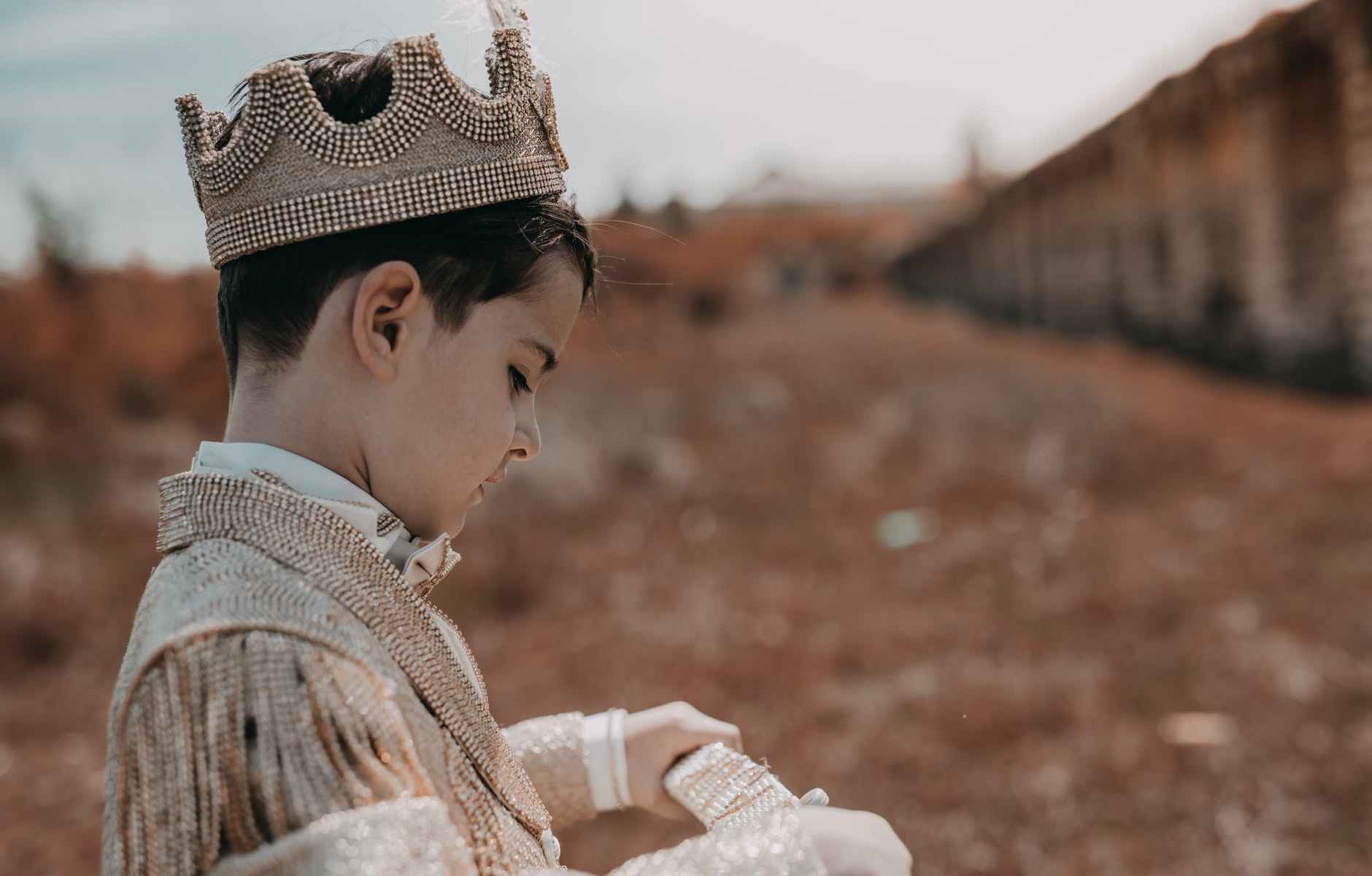
The clue (and mythic clew) leading to the answer to our question comes from the primary image critics use to characterize the ex-president. Stephen Colbert, for example, brings a 9-year-old boy on camera to read a public statements made by Trump so that Colbert can hold the statement up for ridicule. The archetypal pattern constellated in Trump’s public persona is the puer aeternis, which is Latin for the eternal boy. (The feminine equivalent is the puella or eternal girl.)
The Puer is the boy who will not, or cannot, grow up. He is an imp, a rascal, a rebel, whose most familiar modern literary manifestation is Peter Pan. The Puer, however, is a betrayal and perversion of the archetypal divine child. The appearance of a divine child brings us a promise of growth, fulfillment and redemption. This child will grow into adulthood to become a savior. The Puer, on the other hand, never grows. He is a victim of arrested development, stuck in childhood, cut off from the flow of life, imprisoned and rotting in an unnatural stagnation. Where the divine child points toward wholeness, transcendence, and a developing relationship between the conscious ego and the unconscious self, the Puer forever clings defensively to his ego.
When someone unconsciously identifies with the Puer, the individual becomes not only inflated, but also possessed by an inhuman archetypal entity. The inflated and possessed personality then can channel an uncanny numinosity, a magical attraction, because the archetypal image has elemental roots deep in the collective unconscious. Add a little narcissism into the mix and you end up with the boy who would be king.
Thus, a narcissistic Puer personality like Trump offers his devotees a chance to “reconnect” to an imaginary ideal, to “return” to an imaginary childhood, as it were, in which all was and will be well — stable and secure, forever. This is the underlying appeal of Trump’s vague promise to make America great again. There’s no need for him to specify exactly when or how America was great. Each listener simply fills the empty promise with his or her personal nostalgia.
Psychologically, the dynamic at play here is the conservative allure of regression, the all but irresistible siren song calling one to relax, to escape from the demands of consciousness and growth. If a magically powerful person is promising to fix things, claiming that only he can fix it, let him do it, because trying to solve problems on one’s own just might require one to change, to expand consciousness, to build ego strength, and that’s such unrelentingly hard work.
The promise that one can simply stop growing and take it easy is how Peter Pan attracted his Lost Boys. It’s a false promise, of course, a lie, but that’s why Trump’s MAGA-world is another utopian “no place” (in Greek, ou-topos), a Neverland — an illusion that is real only for wishful thinkers.
Thank you for reading my blog. If you enjoyed this post or found it insightful, please share it with your friends. And feel free to invite them to follow the blog, too. Oh, and while you’re at it, why not check out my book, Moonlight Shines in the Darkness, a Jungian study of Jesus and the feminine in the Gospel of John.
 Soul Spirit Wisdom