
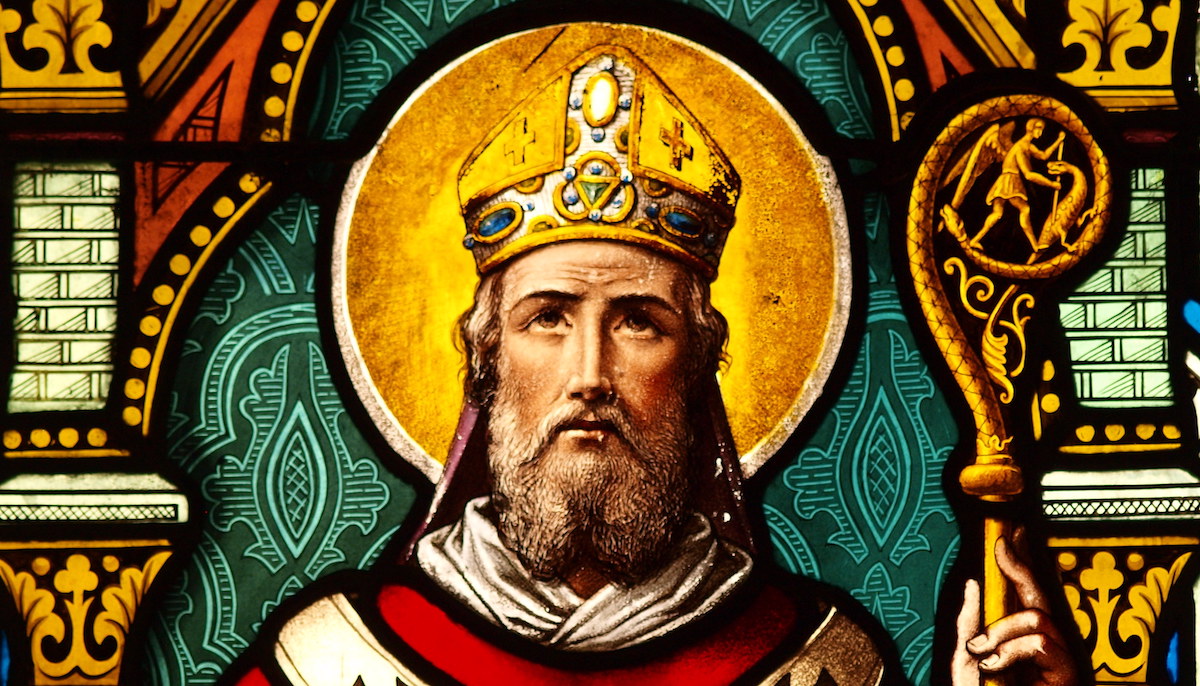
IF YOU ASK PEOPLE TO DESCRIBE GOD, THEIR ANSWERS will tell you what they truly value most, what for each of them is their “ultimate concern.” For most of us, our god-images and the values they represent will be the ones generally held in the communities to which we belong. For example, the most traditional god-image in America, the image that still haunts the imaginations of many mainstream believers and nonbelievers alike, is the image of God as an all-knowing, all-powerful, all-good, heavenly king overseeing creation.
Even though Nietzsche declared this god (image) dead in the waning years of the 19th century, the image persists. An infamous 1966 TIME magazine cover, announcing a story about the work of a handful of radical “death-of-God” theologians, asked “Is God Dead?” The theologians may have thought so, but the God-as-King image has remained mostly intact in the American imagination. God, being eternal and deeply rooted in culture, just doesn’t die off or change quickly or easily, even if various philosophers and theologians repeatedly point out the inadequacies of the popularly held images.
So, let’s think a while about the values represented by this still popular image of God as our heavenly king.
Because God is seen as a king, He is also seen as a male. This suggests we value maleness more highly than femaleness, masculinity more than femininity. Can you picture God as the heavenly Queen? Or, even more radically, how might we imagine God uniting and transcending both genders, neither he nor she but also not it? Genesis 1:27 says God created humankind, both male and female, in God’s image. How might our limited human souls imagine such a male-and-female image of God? This is why we need to have feminist voices in our theological choir and feminine elements in our god-images. (See, for example, my study of Jesus and the feminine in the Gospel of John.)
Because God is seen as a king, as a heavenly monarch, we must sort out a pair of conflicting values. On the one hand, the image suggests we value autocracy more than other forms of governance. This value manifests in the now antiquated notion of the divine right of kings, but also in more modern totalitarian and authoritarian movements. On the other hand, asserting God as the rightful king challenges the legitimacy of any human claim to imperial power. The radically subversive claim of the biblical Jesus movement was that because God/Christ is king, Augustus Caesar was not. Isn’t this latter understanding the root value behind American democracy and the First Amendment principle of the separation of church and state?
If the God-as-king metaphor feels too cold, too harsh and distant, how about the metaphor Jesus gave us: God, the Father. To ancient ears, that image suggested God as Patriarch, and as Patron. Both of these images lead us back toward the values represented by God as a dominant male and monarch. Of course, to our modern ears, God as father carries us toward idealized associations with our own intimate family experiences. Unfortunately, not all earthly fathers are good and kind and loving. Once again, as with the image of God as king, we can see how problems quickly arise when God as Father becomes father as god. Still, a fatherly god-image does have the potential to bring love into view.
If we follow the lead of the elder who penned 1 John and proclaim, “God is love” (1 Jn. 4:8), or “God is light” (1 Jn. 1:5, a metaphor suggesting goodness, consciousness, wisdom, enlightenment, and so forth), our ruling values or ultimate concerns will be clear and relatively unambiguous, but our god-image will become abstract and impersonal. Can one love “love” or “light” the way one might love one’s father or even one’s king? It’s the same problem Christians can encounter in relating to the “Holy Spirit” as the third “person” of the Trinity — the Spirit feels too abstract, too impersonal, more of a thing or a concept than a person.
As you are no doubt fully aware, the metaphorical images of God we’ve thought about here are but a tiny few of the myriad of metaphorical images humans have called upon to give expression to the ineffable. Each image evokes its own set of values. While no single god-image is the “right” one, and every god-image is a metaphor with a limited capacity to carry us toward its transcendent referent, it seems clear that some images are more limited, more inadequate than others. The limits of the inadequate images usually come clearly into view when you tease out the values each image carries.
So, perhaps we should recognize the inherent limitations of every god-image and resist clinging to any one of them. Instead, we could be flexible and fluid in our metaphoric vehicles. Maybe we should hold on loosely to one of the good ones, for a while, until one of her or his beloved companions steps into view.
(Now we’re getting into the theology of panentheism, which is a whole other story.)
Thank you for reading my blog. If you enjoyed this post or found it insightful, please share it with your friends. And feel free to invite them to follow the blog, too. Oh, and while you’re at it, why not check out my book, Moonlight Shines in the Darkness, a Jungian study of Jesus and the feminine in the Gospel of John.
 Soul Spirit Wisdom