EXPERIMENTAL AND BEHAVIORAL PSYCHOLOGIES DENY THE SOUL, and psychoanalytic psychologies explain away meaning. Jungian psychology does neither. Instead, it maps out a path toward a post-critical, re-enchantment of life.
In our post-Enlightenment, postmodern world, psychology should help us understand the soul, because “psyche” means “soul.” Unfortunately, experimental and behavioral psychologies ignore the soul altogether by focusing on external, conscious, and biological phenomena. And psychological systems based on or derived from psychoanalysis begin with Freud’s a priori assumption that an individual’s psyche is born tabula rasa, as a clean slate, and so they lead only to reductionistic, “nothing-but” conclusions that either diminish meaning or erase it altogether.
A simple return to traditional religion and spirituality feels appealing, but is no longer a viable way to go. The naïveté of premodern thinking and superstition has given way to rational, critical analysis, and now there’s no way to put this genie back into the bottle. To deny reason is to walk a defensive and regressive path back into darkness. The only way forward into a more abundant life is to transform and transcend the excesses of critical thinking by pushing through them.
While Jungian psychology is akin to experimental and behavioral psychologies in its empirical approach, it nevertheless includes within its scope, and takes seriously, all types of psychological experience, including religious, spiritual, and mystical experiences. It offers a theoretical model of the psyche that’s radically open to the mystery of the transpersonal world and recognizes the possibility of meaningful connections between inner and outer realities. In other words, Jungian psychology is a “soul science.”
As important as theories are for understanding the human experience, a theory remains nothing but words, if it doesn’t lead to practical applications in real lives. Jungian psychology offers an interpretive method that helps us rediscover not only meaning in life, but also a sense of awe. This method moves us through the full interpretive arc, from an innocently naïve experience of things at face value, through a critical analysis of those things in the light of reason, to a transformed or “second” naïveté that retains the analytical insights of critical thinking and at the same time (re-)awakens us to an enchanted experience of the ineffable mystery in and beyond the things being interpreted. (This theory of interpretation comes from Paul Ricoeur, especially as presented in his book, Interpretation Theory.)
Thus, the key to Jungian interpretation lies in a two-fold recognition, first that the psyche “speaks” in symbols, and second that a symbol points beyond itself to represent, as best it can, something that is ultimately unknowable. Unlike a sign, therefore, a symbol is inexhaustible. It never “means” only one thing, but always remains open and able to reveal new dimensions of truth in new situations and new contexts. (Paul Ricoeur and Paul Tillich also understand symbols/metaphors this way.)
Given the polysemous nature of symbols, Jungian interpretation uses a process of association to tease out more of a symbol’s range of possible meanings. This interpretive process, which Jung called amplification, differs significantly from Freudian free association. In free association, one association can lead to an association on the first association, then to an association on the second association, and so on in a theoretically infinite chain of associations. In amplification, on the other hand, each association is linked back more or less directly to the original symbol. If we were to diagram of the pattern of associations used to amplify a symbol, it would look like a starburst, not like a meandering line of free associations heading off into infinity.
This, then, is why Jungian psychology (along with its direct descendants and close kin, archetypal psychology and transpersonal psychology) not only has held my interest, but also has guided my spiritual journey for almost 50 years now. As a form of empirical science, it speaks a modern (and often postmodern) language that doesn’t require me to leave reason at the door. At the same time, it still honors and helps me find meaning in art, myths, movies, scripture, wisdom literature, and my own experiences of mystery.
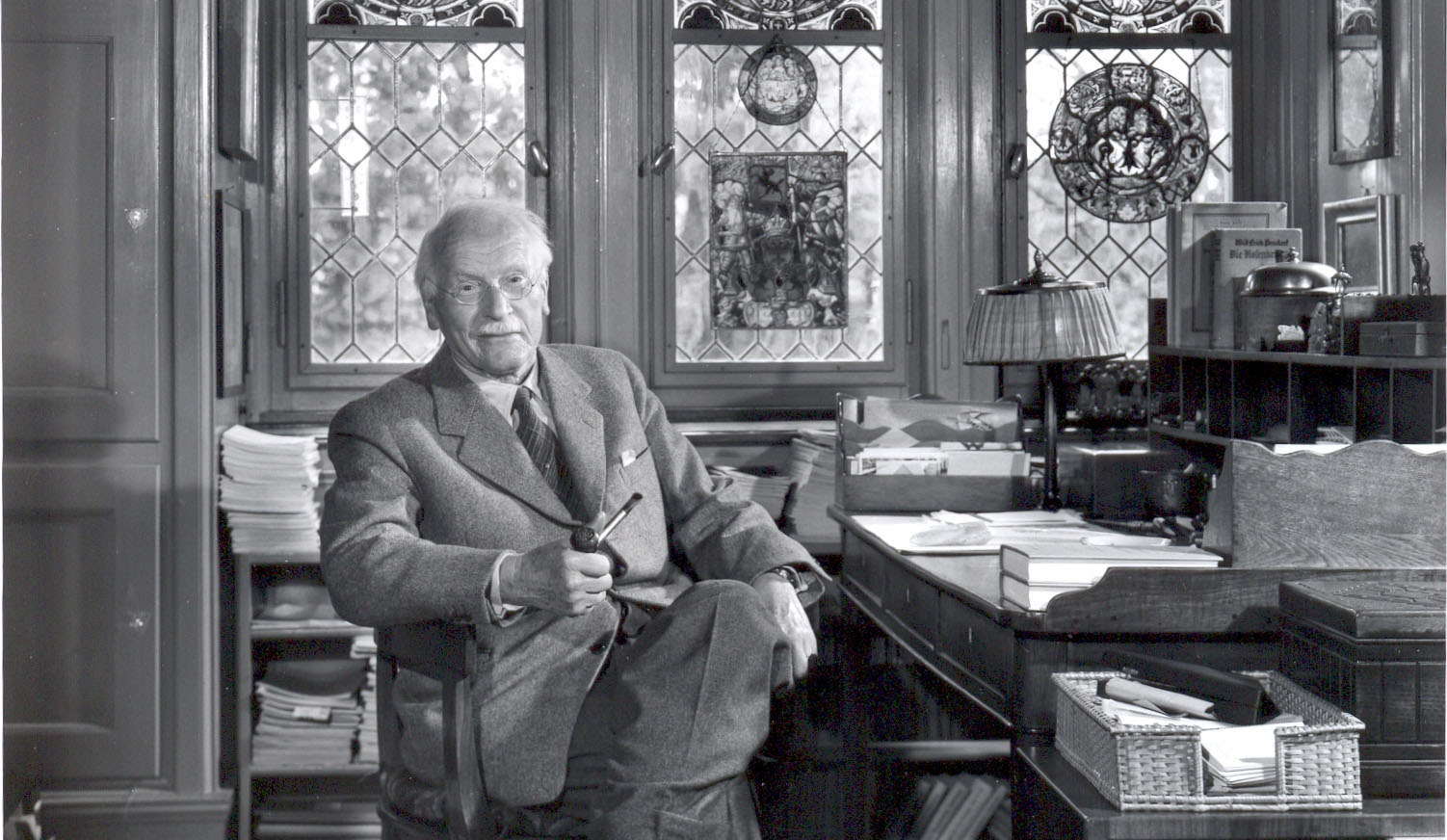
Above the front door of his home, Jung carved a Latin motto from Erasmus. It speaks volumes about his work, his life and his psychology: VOCATUS ATQUE NON VOCATUS DEUS ADERIT (Whether called or not, God will arrive). This is what critical scientists and modern humans encounter when they experience the awesome and enchanted, post-critical world of the second naïveté.
 Soul Spirit Wisdom